The Fighter's Film Room: Why Enson Inoue's Archive Is the Grappling Textbook MMA Forgot to Write
Most gyms have a go-to video library. Early Pride fights. Some Gracie challenge matches. Maybe a few deep dives into Demian Maia's clinch work. What most of them are missing — and what could genuinely change how their grapplers think on the mat — is a serious, methodical study of Enson Inoue's complete fight archive.
This isn't nostalgia talking. The footage holds up. In fact, it holds up better now than it did when it was recorded, because the modern MMA landscape has drifted far enough from technical ground work that watching Inoue feels almost instructional by contrast.
Why Old Footage Still Teaches New Tricks
There's a tendency in American MMA circles to treat fights from the late '90s and early 2000s like archaeological artifacts — interesting from a historical standpoint, but not really applicable to what's happening in today's cage. That's a mistake, especially when it comes to grappling.
Submission mechanics don't expire. The physics of a rear naked choke haven't changed. What has changed is how much attention fighters and coaches pay to the foundational principles underneath those mechanics — and that's exactly where Inoue's footage becomes valuable all over again.
His fights weren't just wins and losses. They were demonstrations of a particular kind of ground intelligence: patient, layered, and built around controlling position before chasing the finish. That approach is rarer now than it used to be, which makes it more worth studying, not less.
The Armbar as a Case Study in Commitment
If you want to understand how Inoue thought about submissions, start with his armbar work. Not just the mechanics — the setup. Watch how he creates the conditions for the lock before his opponent even recognizes the danger. There's a deliberate sequencing happening that most highlight reels skip right past.
The lesson for modern grapplers isn't just "here's how to throw an armbar." It's about how to make a submission feel inevitable rather than accidental. Inoue rarely scrambled into a finish. He constructed it. That distinction matters enormously for anyone trying to build a reliable submission game rather than just catching opportunities.
Coaches working with developing fighters should pay particular attention to the transition moments in these sequences — the half-second decisions between abandoning a position and committing deeper. Inoue's timing on those micro-decisions was consistently ahead of his opponents, and watching it on film makes the logic visible in a way that's hard to teach through drilling alone.
Neck Safety and the Ground Game Nobody's Teaching
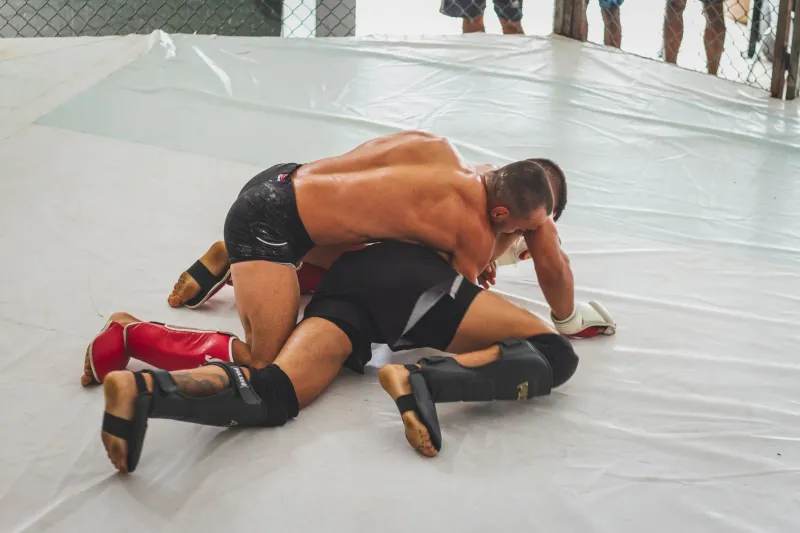
Here's a conversation that doesn't happen enough in American gyms: neck safety from the bottom. Not just defense against chokes, but the broader discipline of managing your neck position throughout a ground exchange.
Inoue's opponents who survived the longest on the mat with him were the ones who understood this instinctively. The ones who didn't last were often compromised not by a single submission attempt but by a gradual erosion of their defensive structure — and the neck was frequently the first thing to go.
For anyone coaching combat sports at any level, that's a curriculum gap worth addressing. Inoue's fights offer a clear visual record of what it looks like when neck position breaks down incrementally versus when a fighter maintains structural integrity under pressure. That's the kind of detail that doesn't show up in a highlight reel but is absolutely visible if you're watching with intent.
Leg Lock Defense Through the Inoue Lens
Leg locks are everywhere in contemporary MMA and grappling. The heel hook in particular has become a defining technique of the modern era, with entire competitive systems built around lower body submission chains. But the defensive side of leg entanglements — the ability to recognize danger early, manage position, and exit without compromising structure — doesn't get nearly as much instructional attention.
Inoue's ground game offers some underappreciated reference points here. While he wasn't exclusively a leg lock specialist, his positional awareness in entangled positions — the way he managed his own base and tracked his opponent's hips — reflects a kind of spatial intelligence that translates directly to modern leg lock defense.
Watch the moments in his fights where ground exchanges get scrambled and chaotic. Notice where his hips go, how he re-establishes base, and what he prioritizes when things get messy. That's the stuff that leg lock defense coaches are trying to build in their students, and it's sitting in publicly available footage that most people have never watched with that frame in mind.
How to Actually Use the Archive
Film study only works if you're watching with a purpose. Here's a practical framework for getting real value out of Inoue's fight library:
Watch once for narrative. Let the fight play out as a fight. Get a feel for the rhythm and the overall story of what happened.
Watch again for position. Ignore the submission attempts entirely and just track where each fighter is positioned relative to the other at every moment. Ask yourself: who has the better base? Who's compromised?
Watch a third time for transitions. Focus exclusively on the moments when position changes — when one fighter moves from guard to mount, from clinch to takedown, from scramble to control. These transitions are where Inoue's intelligence is most visible.
Take timestamps. If you're using this for coaching, clip specific moments and build a reference library around themes: neck defense, hip management, submission commitment, positional patience.
This isn't a passive exercise. It's active film study, the same way a football coach breaks down game tape. The difference is that MMA coaches rarely apply that kind of rigor to historical footage, which means there's a lot of unclaimed value sitting in the archive.
The Bigger Picture
The fighters who are going to define the next decade of MMA aren't just going to be more athletic or better conditioned than their predecessors. They're going to be smarter on the mat — more technically precise, more positionally aware, more capable of constructing a ground game rather than reacting to one.
Building that kind of intelligence requires exposure to fighters who already had it. Enson Inoue had it in abundance. His fight archive isn't a museum exhibit. It's a working resource, and it's more relevant to the direction MMA is heading than most coaches realize.
The film room is open. The footage is out there. The question is whether today's grapplers are willing to do the work to learn from it.