Lifting Smarter, Not Louder: How Enson Inoue's Strength Philosophy Quietly Predicted the Future of MMA Conditioning
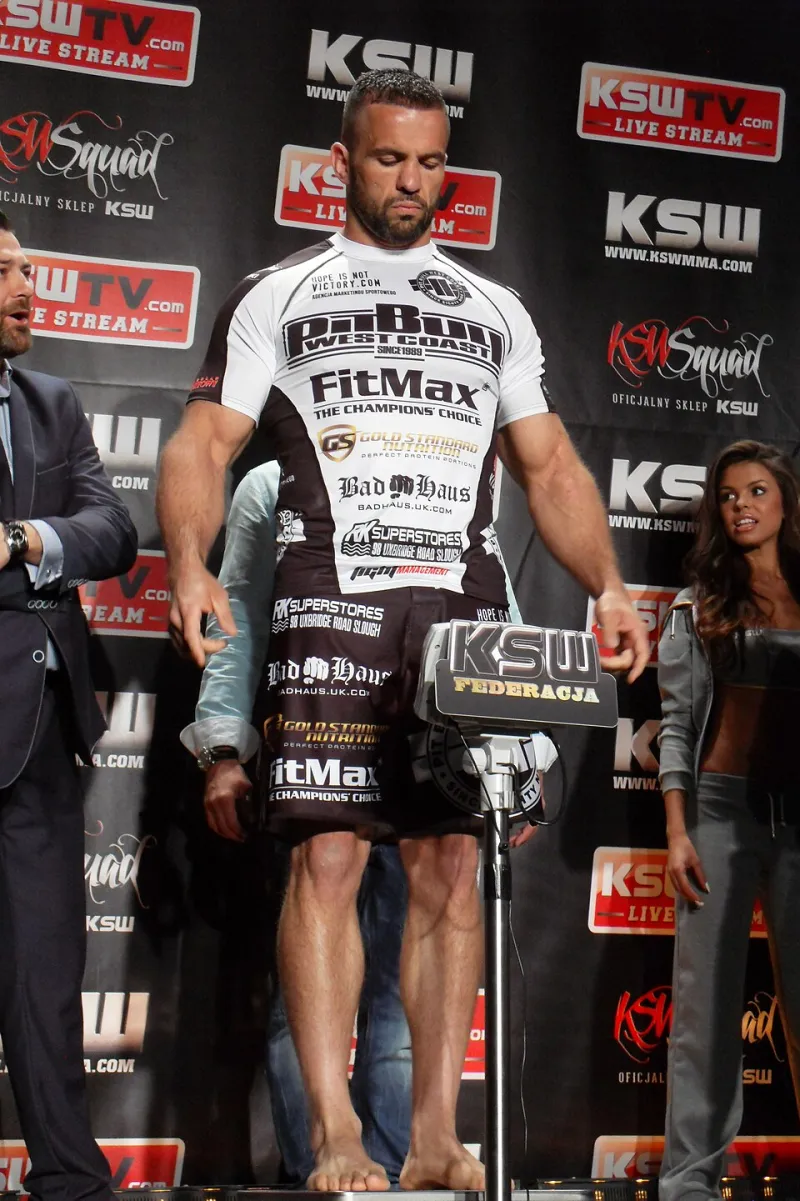
Photo: Artur Andrzej, CC BY-SA 3.0, via Wikimedia Commons
There's a version of MMA history that gets told a lot — the one about technique evolving, about ground games improving, about fighters becoming more well-rounded. But there's another story that doesn't get nearly enough airtime: the story of how fighters learned to build bodies that could actually last through a fight. And if you trace that story back far enough, you keep running into Enson Inoue.
He wasn't the loudest guy in the weight room. He wasn't posting max lifts on social media or chasing a bodybuilder's physique. But what he understood about physical preparation — about building functional, fight-ready strength — was something most of his contemporaries were nowhere close to grasping.
The Problem With How Everyone Else Was Training
Cast your mind back to the late '90s and early 2000s. The average MMA fighter's strength and conditioning program was, to put it charitably, a mess. Guys were either doing old-school powerlifting routines borrowed from football programs, grinding out endless cardio with no structure, or just sparring themselves into the ground and hoping for the best. The idea of training as a science — with periodization, recovery windows, energy system development — was barely on anyone's radar.
The dominant belief was simple: if you were tough enough and hit hard enough, you'd figure the rest out. Conditioning was almost an afterthought, something you worried about when fight camp started. The concept of year-round physical development, building a base and then peaking for competition, was foreign to most fighters at that level.
Enson Inoue operated differently. From the accounts of those who trained alongside him and the observable evidence of how he performed under pressure, it's clear he approached his body as a long-term project rather than a short-term fix.
Functional Over Flashy
One of the clearest threads running through Inoue's physical philosophy was a rejection of size for size's sake. He wasn't trying to look impressive — he was trying to be effective. That distinction matters more than it sounds.
The fighters who were chasing bulk in that era often found themselves gassing out in the later rounds, carrying weight that slowed their transitions and taxed their cardio. Inoue's build was compact and dense, built around movements that translated directly to the demands of a fight. The kind of strength that lets you control a scramble, maintain pressure from top position, or power through a submission attempt when your arms are already burning.
Modern conditioning coaches call this "sport-specific strength" — the idea that your physical preparation should mirror the actual mechanical demands of competition. Today, it's standard practice at any serious MMA gym. Back then, it was practically revolutionary.
The Endurance Equation
Inoue's fights, particularly during his prime years in Japan, showed something that pure technique can't fully explain: he could sustain his game deep into a bout. His submission attempts didn't lose their precision in the third round. His movement didn't deteriorate under fatigue the way it did for opponents who'd trained harder but trained wrong.
That kind of durability doesn't happen by accident. It points to an athlete who understood the difference between building cardiovascular capacity and building fight-specific endurance. Those are not the same thing, and confusing them is one of the most common mistakes recreational and even professional fighters still make today.
Fight endurance is about training your body to perform complex, explosive, skill-dependent actions repeatedly under accumulated fatigue. It's about teaching your nervous system to stay efficient when everything in your body is screaming to slow down. The modern approach to this involves careful manipulation of work-to-rest ratios, heart rate zone training, and energy system specificity. Inoue was living that approach before the terminology existed to describe it.
Recovery as a Training Tool
Here's something else that separates serious athletes from grinders: understanding that adaptation happens during rest, not during work. The training session is the stimulus. The recovery period is where your body actually gets stronger, faster, and more resilient.
This concept is foundational in modern sports science. It's why elite fighters today have dedicated recovery protocols — sleep optimization, nutrition timing, soft tissue work, deload weeks built into their training blocks. It's treated as part of the job, not a luxury.
For most fighters in Inoue's era, pushing through fatigue was considered a virtue. Rest was weakness. Overtraining was practically worn as a badge of honor. Inoue's longevity and sustained performance suggest he had a different relationship with recovery — one that preserved his body's capacity to perform when it mattered most.
What Modern Gyms Are Rediscovering
Walk into any top-tier MMA facility in the US today — whether it's an American Kickboxing Academy affiliate, a Tristar-influenced setup, or one of the newer performance-focused gyms popping up in major cities — and you'll find a conditioning philosophy that would have seemed almost academic in the late '90s. Strength coaches with sports science degrees. Training blocks that build toward a competition peak. Careful monitoring of athlete load to prevent the kind of cumulative breakdown that derails camps.
They're also finding that the fighters who last — the ones who compete at a high level for a decade or more — tend to be the ones who treated their physical preparation as a discipline rather than a chore. They trained with intention. They built strength that served their fighting style rather than contradicting it. They respected the relationship between effort and recovery.
That's the Inoue template. Not because he wrote it down and handed it out, but because the evidence of his career reflects those same principles at work.
The Legacy Nobody's Claiming
It's worth sitting with the irony here. The conditioning revolution in modern MMA is real, it's well-documented, and it's credited to a range of coaches, sports scientists, and forward-thinking athletes. Enson Inoue's name almost never comes up in that conversation.
But the principles he embodied — functional strength, fight-specific endurance, the discipline to train smart instead of just hard — are exactly the principles that conversation keeps circling back to. He wasn't writing whitepapers or running seminars. He was just doing the work the right way, in an era when almost nobody else was.
That's a different kind of influence. Quieter than a title belt, harder to point to on a highlight reel. But for anyone paying close attention to how the sport has evolved physically, the connection is hard to miss.
The weight room prophets rarely get credit until everyone else figures out what they already knew. In Enson Inoue's case, the sport is still catching up.