The Arm That Didn't Come Back: How One Enson Inoue Finish Rewrote the Rulebook on Submission Defense
There's a category of fight footage that coaches return to over and over again — not because the finish was flashy, but because it was instructional. The kind of clip where you can pause it at any point in the sequence and find something worth teaching. Enson Inoue produced more than his share of those moments, but one armbar finish in particular stands out as the kind of technical execution that quietly changed how fighters in American gyms think about defending the ground game.
The thing about Enson's submission work was that it rarely looked like he was hunting. That was the trap.
Setting the Table Before Anyone Knew Dinner Was Served
The setup was almost boring to watch in real time. Enson wasn't cranking or scrambling. He was controlling — maintaining pressure, managing posture, and letting his opponent make the kind of small positional errors that accumulate into disaster. The opponent, working from a defensive guard position, was doing what most fighters at that level were trained to do: stay tight, limit space, and wait for a scramble opportunity.
What he wasn't prepared for was how Enson used that tightness against him.
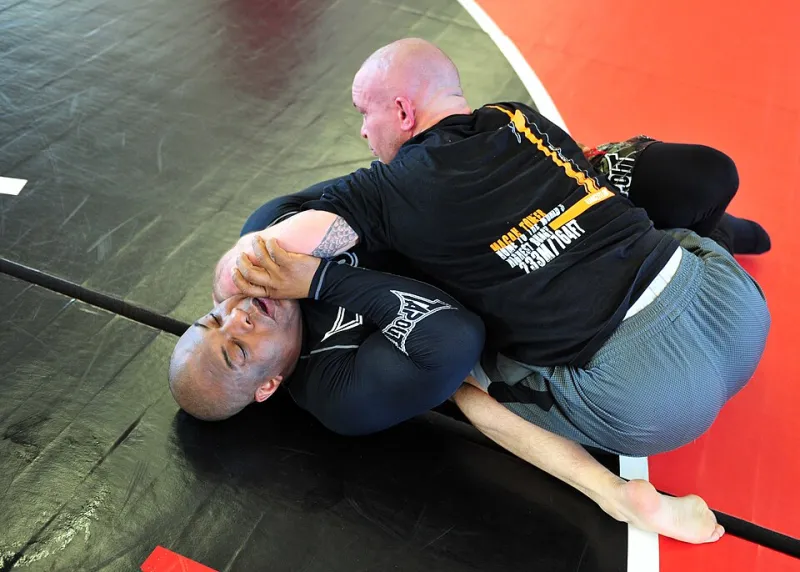
By staying compact, the opponent actually made Enson's job easier. There was no wild movement to track, no explosive hip escape to deal with. The arm was right there, tucked in close, and Enson had been patiently angling his hips for the better part of ninety seconds to set up the exact leverage point he needed. When the finish came, it came fast — a clean, high-percentage armbar that had the arm extended and the tap coming before most people watching even registered what had happened.
The opponent's corner looked stunned. The crowd reacted with that half-second delay that only happens when something catches everyone off guard.
The Defensive Mistake That Nobody Was Talking About
Here's where it gets interesting from a coaching perspective. In the aftermath, most of the conversation centered on how good Enson looked. And he did. But the more important conversation — the one that started happening in gyms months and years later — was about what the other guy did wrong.
The mistake wasn't a single error. It was a philosophy.
At the time, conventional defensive grappling wisdom in American MMA leaned heavily on what you might call "survive and reset" thinking. The goal when you were on your back was to neutralize the threat long enough to get back to your feet or at least into a neutral scramble. Fighters were taught to keep their elbows in, don't give up your back, and look for the hip escape.
What that framework didn't account for was a fighter like Enson, who wasn't particularly interested in rushing the finish. He was comfortable on the mat. He wasn't worried about the clock or the crowd. He could sit in a position and work micro-adjustments for minutes at a time, and each of those tiny adjustments was moving the geometry of the situation slightly more in his favor.
The opponent's defense was built for a different kind of attacker. Against Enson, it was like bringing a rain jacket to a flood.
The Ripple Effect Across American Gyms
You won't find a lot of people explicitly crediting this finish when they explain why submission defense training evolved the way it did through the early and mid-2000s. That's kind of the Enson Inoue story in general — the influence is real, the attribution is rare.
But coaches who were paying attention started asking different questions after watching footage like this. Instead of just drilling the standard elbow-in defense, they started asking: what does a fighter do when the attacker isn't rushing? How do you defend against someone who's happy to hold a position and wait?
That led to a broader emphasis on what some coaches started calling "active defense" — the idea that staying still and tight wasn't actually safe against a patient, technically sound grappler. Fighters needed to be continuously moving, creating small disruptions in their opponent's base, making the leverage math constantly shift rather than letting it settle.
It also pushed gyms to spend more time on positional awareness training — specifically, teaching fighters to recognize when they were gradually losing ground rather than just reacting to obvious submission attempts. Enson's setups were subtle enough that by the time most opponents recognized the danger, the window for escape had already closed.
What Made This Particular Finish Different
A lot of Enson's submission work was impressive because of his commitment and toughness. He'd fight through scrambles, absorb punishment, and keep hunting. But this finish was different because it was almost effortless in its execution. There was no drama in the setup. No moment where it looked like he might not get there.
That kind of clinical efficiency is actually harder to pull off than a scrambled, adrenaline-fueled submission. It requires a level of positional understanding that most fighters — even very good ones — don't develop because they never slow down enough to build it.
Enson had that understanding. And watching him apply it against someone who was genuinely trying to defend made the gap obvious.
Why It Still Matters Today
Modern MMA has gotten significantly better at submission defense. BJJ is more widely practiced, wrestling is more integrated, and fighters generally have a much higher floor of grappling literacy than they did two decades ago. But the core lesson from this finish hasn't expired.
Patient, positional grappling still beats reactive defense. A fighter who understands leverage and is comfortable taking time to build toward a finish will still catch opponents who are simply waiting for the obvious attack to show up.
Enson Inoue understood that before most people in American MMA were even asking the right questions. This finish was one of the clearest demonstrations of that understanding — a piece of fight footage that, if you know what you're looking at, is still worth studying.
The arm didn't come back. But the lesson it left behind has been circulating through gyms ever since.