No Credit Given: How Enson Inoue's Techniques Spread Through MMA Without His Name Attached
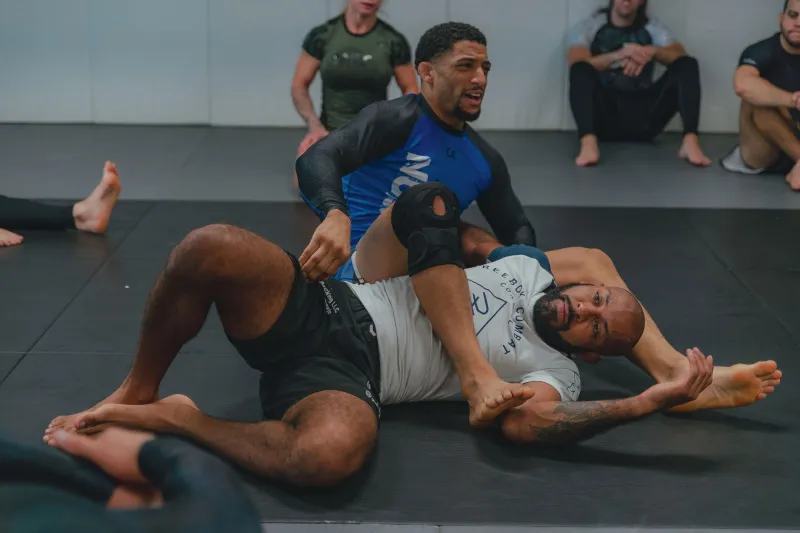
Walk into almost any serious MMA gym in America today and you'll encounter techniques that trace back to Enson Inoue — even if nobody in the room knows it. His submission mechanics, positional instincts, and defensive frameworks have quietly become standard curriculum, passed down through coaches and YouTube clips without a single mention of where they actually came from. That's not a slight against Inoue. In a weird way, it might be the highest compliment the sport can pay him.
When an idea gets absorbed so completely into a culture that people stop asking where it originated, that's not erasure. That's dominance.
The Way Knowledge Travels in Combat Sports
MMA doesn't have a textbook. It never has. Knowledge in this sport travels the way it always has in martial arts — through bodies, not books. A coach who trained under someone who trained under someone else passes down a technique with his own fingerprints on it. The original source gets buried under layers of adaptation, rebranding, and honest-to-goodness forgetting.
Enson Inoue operated at a time when American MMA was still figuring out what it even was. The mid-to-late 1990s and early 2000s were a chaotic period — guys were duct-taping wrestling to boxing and calling it a fight camp. Inoue came in with something different: a deeply integrated submission game built on patience, positional control, and an almost eerie ability to stay calm while everything was going sideways on the mat.
Those qualities didn't disappear when his competitive career wound down. They got absorbed.
What Got Passed Down Without a Label
Let's be specific, because vague tributes don't do anybody any good.
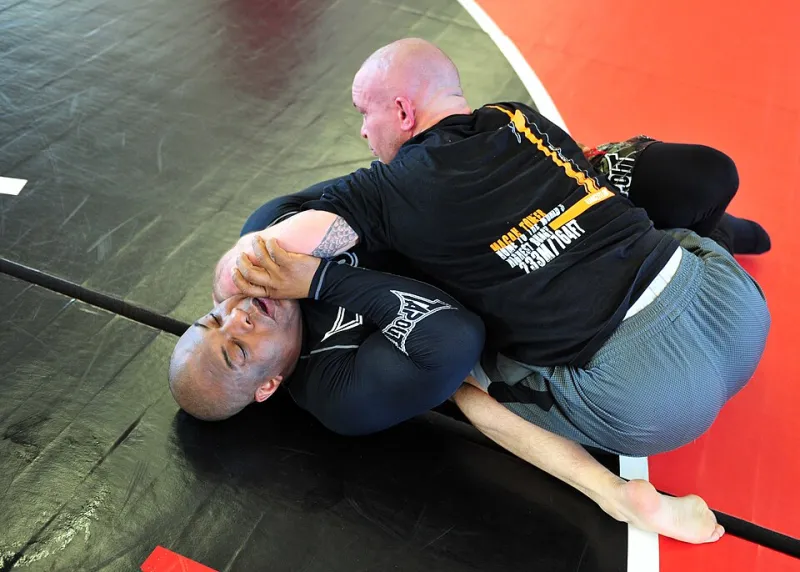
Inoue's approach to positional dominance — particularly his insistence on controlling transitions rather than rushing to finish — shows up constantly in how modern coaches teach top control and guard passing. The idea that you slow the fight down before you go for the submission, that you make your opponent carry your weight and burn their energy while you stay composed, is something you'll hear in gyms from Portland to Miami today. Most of the coaches teaching it learned it from someone who learned it from someone who may have watched Inoue fight in Japan without ever connecting the dots.
His defensive awareness off his back is another one. Inoue wasn't just a guy who attacked from guard — he was meticulous about not giving up position in the first place. That kind of mat intelligence, the ability to read when a scramble is going wrong and pump the brakes before it turns into a disaster, is exactly what high-level coaches now call "positional IQ." It's a concept. It's being taught. And its roots run through fighters like Inoue who demonstrated it under real pressure, in real fights, before the sport had language for it.
YouTube Did What the History Books Didn't
Here's something worth thinking about: Inoue's fight footage is more accessible now than it ever was during his active career. Clips from his Shooto and PRIDE days circulate on YouTube, posted by fans and archivists who understood what they were looking at. Coaches have stumbled onto this footage while researching submission defense, guard retention, or transition timing — and built entire drilling sequences around what they saw.
The funny part? A lot of those coaches have no idea who they're watching. They see a fighter with exceptional mat instincts, clip the relevant sequence, and build it into their program. The technique gets taught. The name doesn't come with it.
That's not malicious. That's just how informal knowledge transfer works in a sport that grew up fast and didn't always stop to document its own history.
The Coaches Who Do Know
It's worth acknowledging that there are coaches — particularly those who came up through the submission grappling and Shooto scenes in the late '90s — who absolutely know where these ideas came from. They watched Inoue fight in real time. They talked about his matches. Some of them trained with people who trained alongside him.
These coaches are the connective tissue between Inoue's era and the current generation. When they teach a defensive guard concept or a submission entry that traces back to his style, they sometimes tell the story. Sometimes they don't, not out of disrespect, but because the technique has become so fundamental that stopping to explain its genealogy would feel like interrupting a math class to explain who invented algebra.
But the lineage is there. It's real. And it matters.
Why Attribution Matters Even When It's Inconvenient
Some people will read this and shrug. Techniques evolve, they'll say. Nobody owns a triangle choke. Fair enough. But there's a difference between a technique existing in the wild and a philosophy of fighting being developed, refined, and demonstrated under pressure by a specific person at a specific moment in the sport's history.
Enson Inoue didn't just use submissions. He built a coherent framework around when to attack, when to wait, how to control without finishing, and how to stay dangerous from positions that other fighters at the time found terrifying. That framework — that way of thinking about the ground game — is what got absorbed into the sport's DNA.
When we don't attach names to ideas, we lose the ability to study the source. And studying the source almost always makes you better. Fighters who go back and actually watch Inoue's matches don't just see techniques — they see the reasoning behind them, executed in real time against real resistance. That context is irreplaceable.
The Legacy That Doesn't Need a Plaque
Enson Inoue has never seemed like a guy who needed his name in lights. His whole career was built around doing the work and letting the results speak. In a strange way, the fact that his influence has spread so far and so quietly — without press releases, without a branded training system, without a Netflix documentary — is completely on brand for who he is.
But for the fighters and coaches out there who are genuinely trying to develop a complete, intelligent ground game, there's real value in going to the source. Pull up the footage. Watch how he manages transitions. Notice what he does before the submission attempt, not just during it. Pay attention to what he doesn't do — the scrambles he avoids, the risks he doesn't take.
You might recognize some of what you see. You might realize you've been learning from him for years without knowing it.
That's the invisible curriculum. And it's been running longer than most people realize.