Scoreboard Lies: What Enson Inoue's Defeats Actually Proved About Him
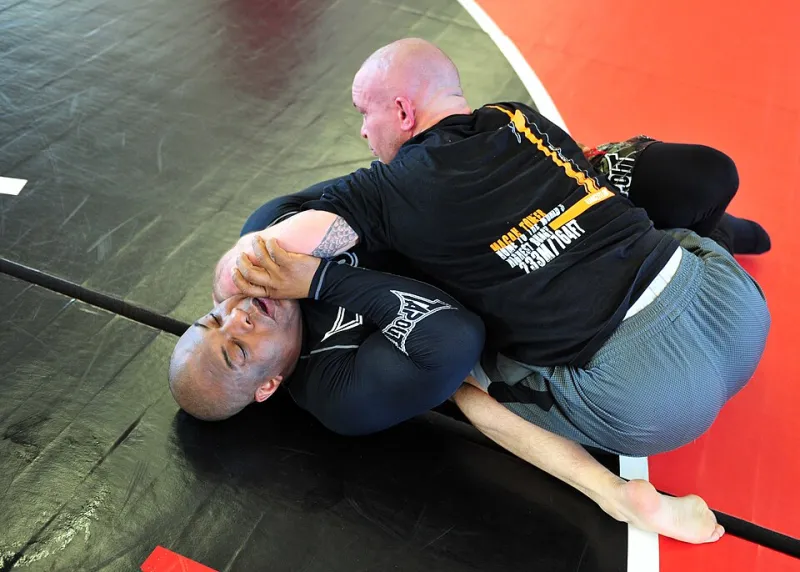
Photo: Sgt. 1st Class Alexander Burnett, Public domain, via Wikimedia Commons
Win columns are comfortable things. They're easy to point at, easy to brag about, easy to build a highlight reel around. But they don't always tell the truth about a fighter. Sometimes the most honest thing about a competitor is how they look when the result doesn't go their way — and by that measure, Enson Inoue might be one of the most revealing fighters the sport has ever produced.
His record isn't perfect. Nobody who competed at the level Inoue did, against the opponents he chose, was ever going to walk away with a spotless sheet. But what those losses actually said about him — about his character, his preparation, his willingness to keep showing up — is a story that a simple win-loss tally completely misses.
The Fights That Hurt the Most Taught the Most
There's a particular kind of loss that happens when you step into a cage or ring with someone operating at the absolute outer limit of human capability. You can prepare perfectly. You can show up in the best shape of your life. You can execute your game plan for stretches at a time. And you can still lose.
Inoue had those fights. His clash with Fedor Emelianenko is probably the most discussed, and for good reason — Fedor was, during that stretch, arguably the most dangerous heavyweight on the planet. Getting stopped by him wasn't an indictment of Inoue's ability. It was context. It was proof that he was competing at a level where even elite preparation only gets you so far.
But here's what matters: Inoue didn't walk away from that fight broken. He walked away with information. He processed what happened, held it up to the light, and figured out what it meant. That's not something every fighter does. A lot of guys in that situation spend their energy on excuses — the ref stopped it early, I was sick that week, the conditions weren't right. Inoue wasn't built that way.
Resilience Isn't a Buzzword When You've Actually Lived It
American sports culture loves the comeback story. We're obsessed with redemption arcs, with the athlete who gets knocked down and claws their way back to the top. It's a great narrative, and it's not always wrong. But it puts all the value on the return to winning — the loss itself is just setup, just backstory, just the sad part before things get good again.
Inoue's relationship with his defeats was different. He didn't treat them as temporary embarrassments to be erased by the next W. He treated them as legitimate data points. As honest feedback from the sport he loved. There's a maturity in that perspective that's genuinely rare, and it's part of why his legacy has stuck around long after fighters with better records have been mostly forgotten.
Real resilience — the kind that actually shapes a person — isn't about pretending a setback didn't sting. It's about letting it sting, sitting with it, and then deciding what you're going to do with that feeling. Inoue consistently chose to do something constructive with it.
What "Winning at All Costs" Actually Costs You
The modern MMA landscape is saturated with the win-at-all-costs mentality. And look, winning matters — nobody's saying it doesn't. But when winning becomes the only thing that matters, something gets lost. Fighters start avoiding dangerous matchups. They start choosing opponents who make their record look good rather than opponents who make them better. They optimize for the scoreboard instead of for growth.
Inoue never really played that game. The opponents on his resume weren't picked for their losing records. They were picked because they represented real challenges, real tests of where he stood as a fighter. That's a choice that requires genuine confidence — not the performed kind, not the trash-talk kind, but the quiet, internal kind that lets you walk toward hard things without needing a guaranteed result at the end.
When you're willing to lose — truly willing, not just paying lip service to the idea — you compete differently. You take risks. You try things. You fight like yourself instead of fighting like someone trying to protect a number. Inoue's best performances, win or loss, had that quality. He looked like a guy who was there to find out what he was capable of, not a guy who was there to avoid finding out the opposite.
The Fighters Who Learned From Watching Him Lose
Here's something worth thinking about: some of Inoue's most instructive moments for the next generation of fighters happened in bouts he didn't win. The way he carried himself under pressure. The way he kept working, kept problem-solving, even when the situation was going sideways. The way he never looked like he was just trying to survive — he always looked like he was still in the fight, still thinking, still competing.
That's teachable. Not the technique stuff, though that's valuable too — but the approach. The mentality of staying present and purposeful even when the scorecards aren't going your way. Young fighters who studied Inoue's full body of work, not just his highlight finishes, got something more valuable than a submission tutorial. They got a model for how to compete when it's hard.
Legacy Isn't Built in the Easy Fights
At the end of the day, nobody remembers the comfortable wins. Not really. The fights that stick in the memory — the ones people are still talking about decades later — are the ones where something real was on the line and someone showed you who they actually were.
Enson Inoue showed you who he actually was in the hard fights. In the losses. In the moments where a lesser competitor might have folded or made excuses or quietly started picking safer matchups. He kept being himself, kept competing with integrity, kept treating the sport with the kind of seriousness it deserves.
The scoreboard said he lost some of those nights. But anyone who was actually paying attention knows better. The wins that define a legacy aren't always the ones that show up in the record books.