Bones Don't Lie: The Hidden War Enson Inoue Fought Before the Bell Ever Rang
There's a version of Enson Inoue's story that gets told pretty often — the warrior ethos, the Japan connection, the submission mastery, the fights that defined an era. That version is accurate. But it's incomplete. Because running parallel to every highlight, every armbar finish, every moment of brilliance inside the cage, there was another fight happening. One that never made the scorecards. One that nobody in the crowd could see.
His body was keeping its own record the whole time.
The Era He Competed In Had No Safety Net
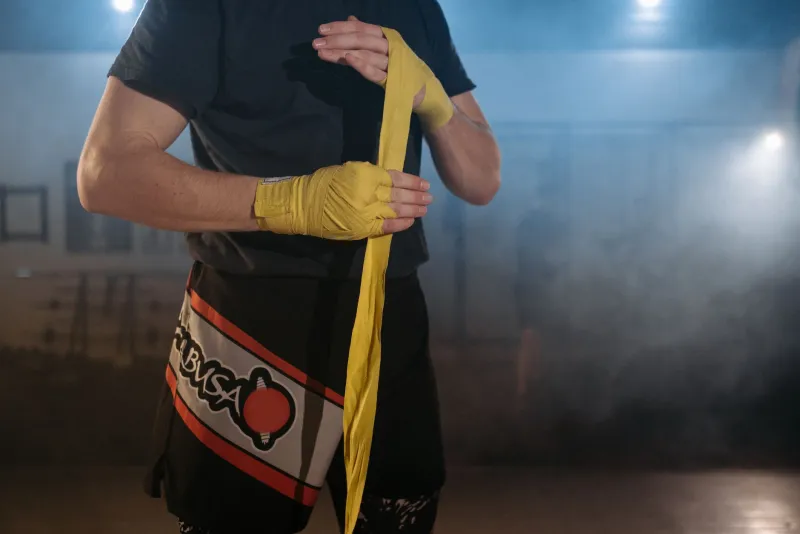
It's worth setting the scene before anything else. When Enson Inoue was making his bones in Japan through Shooto and later Pride, the sports medicine infrastructure that fighters take for granted today simply didn't exist at that level. There were no specialized MMA physical therapists embedded in training camps. No biomechanical assessments. No periodization coaches monitoring tissue load between training blocks. You got hurt, you wrapped it, you kept moving.
That wasn't specific to Enson. That was the entire sport. But the way he fought — aggressive, pressure-forward, always looking to impose his will physically — meant he absorbed more contact than most. His style demanded it. He wasn't built to circle away. He was built to take you somewhere uncomfortable and keep you there.
That approach works. It also extracts a price.
Cumulative Damage Is the Opponent Nobody Puts on the Card
Sports science has gotten pretty good at explaining what cumulative physical damage does to an athlete's performance over time. The concept is straightforward: every injury that doesn't fully heal before the next training cycle begins compounds. Scar tissue builds up. Range of motion narrows. Reaction time slows in ways that don't show up on any test but absolutely show up in a fight.
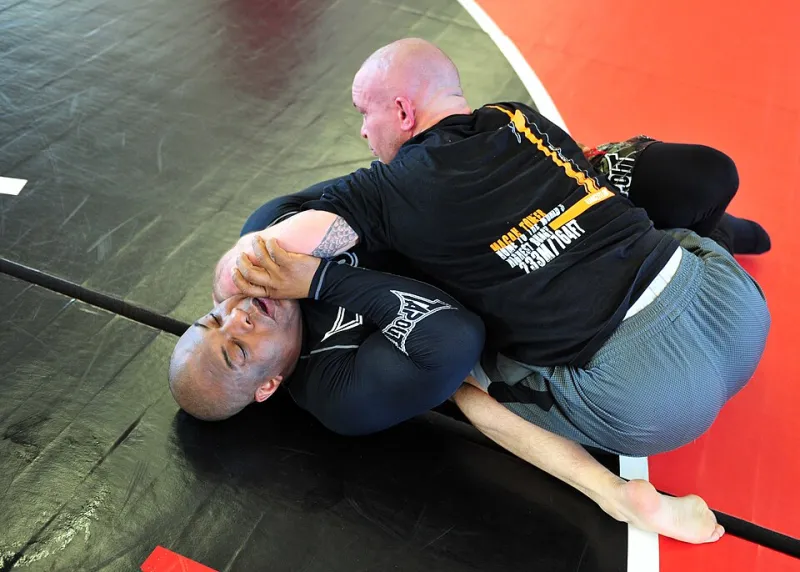
For a grappler of Enson's caliber, even minor joint degradation is significant. Submissions are won and lost in centimeters. A shoulder that's been separated once and never properly rehabbed doesn't fire the same way when you're cranking an armbar in the third round. A knee that absorbed a hard takedown defense six months ago might hold up fine in drilling but buckle under the specific pressure of a scramble at fight pace.
Enson competed across a stretch of years where these micro-injuries stacked. And he competed hard — not just in bouts but in training. The same intensity he brought to fights, he brought to the gym. That's admirable. It's also the kind of thing that quietly eats a fighter from the inside out.
What the Fight Tape Actually Shows
If you go back and watch Enson's later career bouts with this lens in mind, certain things start to look different. Moments that might read as strategic hesitation could reasonably be interpreted as physical limitation. Transitions that he executed with fluid ease early in his career became slower, more deliberate. That's not a knock — it's a natural consequence of a body that had been through the wringer repeatedly without the recovery tools we now know are essential.
The Fedor fight is the obvious reference point for a career-defining moment of adversity. But there were other bouts, less discussed, where Enson walked into the cage carrying damage from previous camps. Fighters who knew him during that period have spoken about how he trained through things that would have sidelined most guys. Shoulder issues. Knee wear. The kind of chronic joint stress that accumulates in any athlete who refuses to take the foot off the gas.
He fought anyway. Every time.
The Warrior Ethos as Both Strength and Cost
Here's the complicated part of this conversation, and it's worth sitting with it rather than rushing to a clean conclusion. The same mentality that made Enson Inoue extraordinary — the refusal to quit, the willingness to absorb punishment in service of the fight — is also the mentality that likely accelerated his physical decline.
In American sports culture, we celebrate the guy who plays through pain. We put him on the highlight reel. We call him tough. And Enson absolutely was tough, in ways that go far beyond the physical. But there's a real cost to that narrative when it becomes the only acceptable path. When tapping out of a training session to protect an injury is seen as weakness rather than intelligence, fighters pay for it later.
Enson operated in an era and a culture — both the Japanese combat sports world and the broader early MMA scene — where that calculus was pretty one-sided. You competed. You trained. You showed up. The body's complaints were secondary to the warrior's obligation.
That ethos produced some of the most compelling performances in the sport's history. It also likely shortened the window in which those performances were possible.
What His Career Taught the Sport, Whether It Meant To or Not
Here's where Enson's legacy gets interesting from a sports medicine perspective. His generation of fighters — guys who competed with minimal recovery infrastructure and maximum intensity — essentially provided the data that informed how modern MMA training camps are structured. Not intentionally. Not through any formal study. But through the observable pattern of how careers ended, how performance declined, and what the long-term consequences of chronic under-recovery actually looked like.
Current elite MMA teams have full-time strength and conditioning coaches who build deload weeks into training cycles specifically because of what happened to fighters like Enson. Recovery protocols, sleep tracking, nutritional periodization — all of it exists in part because the sport watched what happened when none of it existed.
That's a strange kind of legacy. But it's a real one.
Resilience Has a Price Tag
None of this diminishes what Enson accomplished. If anything, it adds a layer to it that makes the accomplishments more remarkable, not less. Winning fights at the level he competed at, against the opponents he faced, while carrying the kind of physical wear his career demanded — that's not just skill. That's something harder to quantify.
But the honest tribute to a fighter like Enson Inoue has to include the full picture. The wins, yes. The losses, absolutely. The philosophy, the technique, the cultural bridge he built between American and Japanese MMA — all of it matters. And so does the physical toll. Because pretending that toll didn't exist, or that it didn't shape the arc of his career, is its own kind of disrespect.
He fought through things most people never face. He did it repeatedly, over years, in an era that gave him almost nothing in terms of support infrastructure. That's worth acknowledging out loud.
The opponent nobody talks about was always there. Enson just never let it win without a fight.