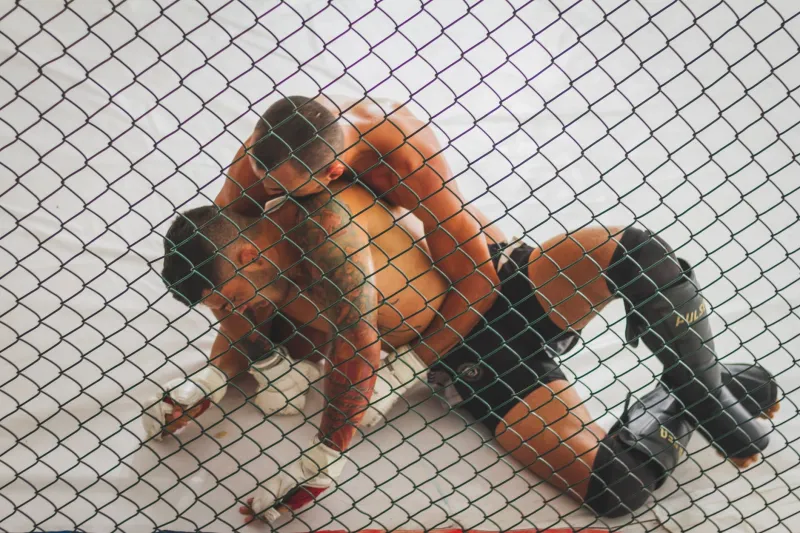
Tapping Out on Submissions: How the UFC's Championship Culture Quietly Buried the Ground Game That Defined a Generation
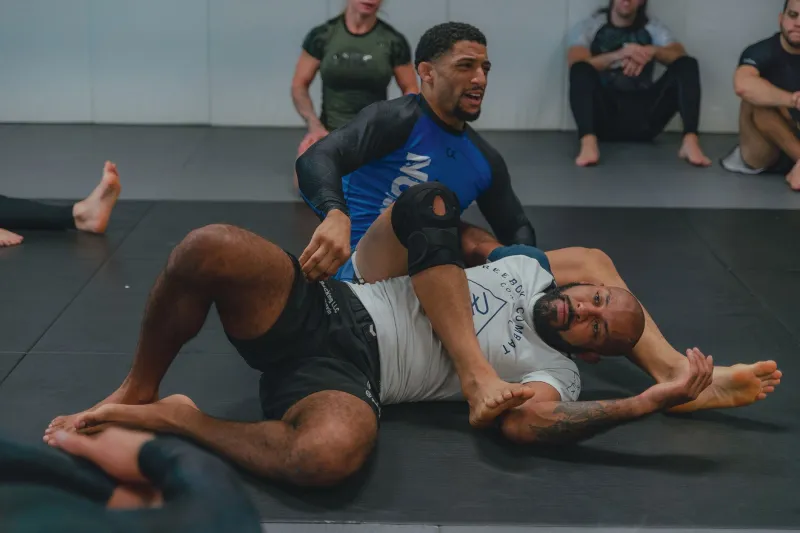
Pull up the last dozen UFC championship fights across any weight class and run a simple tally. Count the knockouts, count the decisions, and then count the submissions. That last number is going to feel uncomfortably small. We're talking about the highest level of mixed martial arts competition in the world, and the technique category that once separated legends from journeymen has quietly become a footnote in the championship conversation.
That shift deserves more attention than it's getting.
For anyone who came up watching the Shooto era — the Japanese promotion that forged fighters like Enson Inoue into something genuinely dangerous on the ground — the current landscape feels like a betrayal of what made this sport worth following in the first place. Inoue didn't just use submissions. He built an entire fighting identity around them, weaponizing the ground in ways that made opponents visibly uncomfortable the moment a fight hit the mat. That wasn't a style choice. It was a philosophy.
The Numbers Don't Lie
FightMetric data and various independent tracking efforts have shown a consistent downward trend in submission finishes at UFC title level over the past decade. Where submissions once accounted for a meaningful slice of championship outcomes — think the early 2000s, when guys like Inoue were making careers out of triangles and rear-naked chokes — the current era skews heavily toward stoppages on the feet or, more often than not, three rounds of point-fighting that end with judges making a call.
In 2023 alone, UFC title fights finished by submission were genuinely rare events. Compare that to the Shooto cards from the late 1990s and early 2000s, where submission rates in elite-level bouts were dramatically higher, and the contrast is jarring. You're essentially looking at two different sports wearing the same name.
The question worth asking isn't just what changed — it's why it matters.
Three Theories, One Uncomfortable Truth
There are a few competing explanations floating around MMA circles, and honestly, all of them carry some weight.
The rule evolution argument points to unified MMA rules and the way judging criteria have gradually incentivized takedown volume over positional dominance and finishing attempts. If a fighter can score a takedown, do minimal damage, and stand back up without ever threatening a submission, they still get credit on the scorecards. The rules, in other words, reward the appearance of grappling without demanding its substance.
The training evolution argument flips the script. Modern fighters are simply better-rounded defensively than they were twenty years ago. Submission defense — specifically the kind of layered, systematic defense you see at American Kickboxing Academy or Sanford MMA — has caught up to submission offense. The argument here is that elite fighters don't finish by submission as often because their opponents have specifically trained to survive those situations.
The risk-aversion argument is the one that stings the most, and it's the one that would have made Enson Inoue shake his head. At the championship level, with millions of dollars and title belts on the line, fighters increasingly manage risk rather than hunt finishes. Attempting a submission means committing to a position that could go wrong. A scramble could result in a reversal. A failed triangle attempt could end up on the wrong side of a ground-and-pound sequence. So fighters don't try. They bank on volume and let the judges decide.
Inoue operated in a different universe mentally. The man took fights in Japan as an American — on enemy turf, in front of crowds that weren't rooting for him — and still went out there hunting the finish. Risk management wasn't part of his vocabulary when the cage door closed.
What Shooto Built That the UFC Couldn't Replicate
Here's the part of this conversation that gets glossed over in mainstream MMA media: the Shooto promotion, which served as Inoue's primary proving ground, had a culture around submission grappling that genuinely doesn't exist in American fight infrastructure today.
Shooto's smaller-venue, technically demanding environment rewarded fighters who could actually finish on the ground. The competitive ecosystem pushed grapplers to develop active submission games rather than passive control. You weren't celebrated for holding someone down for three rounds. You were celebrated for making them tap.
Inoue thrived in that environment because he internalized it completely. His triangle choke wasn't a desperation move or a lucky catch — it was a calculated weapon he deployed from specific positions he'd drilled thousands of times. That kind of ground-game intentionality is rare in today's championship landscape, where submissions often look more like opportunistic catches than premeditated attacks.
The Athleticism Trap
There's another factor that doesn't get discussed enough: the premium modern MMA places on raw athleticism has, in some ways, worked against technical submission development.
When you're recruiting fighters who are elite wrestlers, elite strikers, or elite kickboxers and then teaching them to be competent in every area, you end up with athletes who are broadly capable but rarely dangerous in any single domain. Enson Inoue was dangerous on the ground in a specific, targeted way. His opponents knew it, prepared for it, and still got caught. That kind of specialized threat is increasingly rare at the top of the sport.
The athleticism-first model that dominates American MMA development produces incredible physical specimens. It doesn't always produce hunters.
Does Anyone in Today's Landscape Still Get It?
To be fair, there are exceptions. Charles Oliveira had a run as lightweight champion that felt like a genuine throwback — a guy who actively sought the finish on the ground and had the technical depth to actually get there. Watching Oliveira work was a reminder of what championship-level submission offense is supposed to look like.
But Oliveira is an exception, not a trend. For every fighter willing to prioritize ground finishing, there are ten more who treat the mat as a place to survive until the referee stands things back up.
The sport isn't broken. But it has drifted away from something important, and the fighters who understand that drift — who study what Enson Inoue and his contemporaries actually built in the Shooto era — are the ones most likely to find the path back.
The Legacy Question
Inoue's career wasn't defined by his win-loss record alone. It was defined by how he competed — by an aggressive, technically grounded approach to finishing fights that made him compelling to watch and genuinely difficult to prepare for. That approach produced losses too, because swinging for the finish always carries risk. He understood that. He accepted it.
The submission drought in modern title fights isn't just a statistical anomaly. It's a symptom of a broader cultural shift in elite MMA away from the kind of finish-oriented ground game that made this sport special in the first place. Every time a championship fight goes to a unanimous decision that didn't have to, that legacy fades a little more.
Someone needs to bring it back. The blueprint already exists. Enson Inoue drew it up decades ago.