Money Left on the Table: The Career Choices That Made Enson Inoue a Legend Instead of a Paycheck
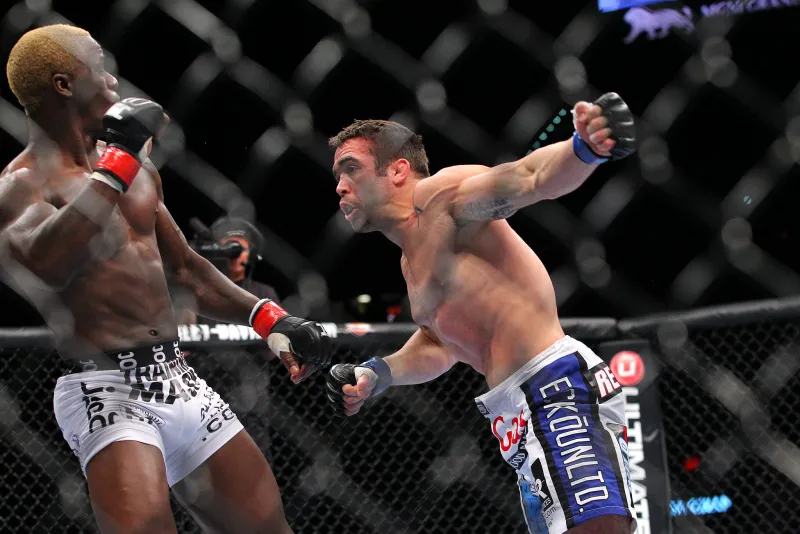
Photo: MMA fighter handshake respect honor combat sports, via wallup.net
There's a version of Enson Inoue's career that probably looked great on a spreadsheet. Fewer dangerous opponents, more promotional-friendly matchups, a cleaner record, maybe a few more zeroes in the bank. That version of Inoue doesn't exist, because Enson wasn't that guy. He was the other kind — the kind who picked the hardest road not out of recklessness, but out of something that's genuinely hard to fake: principle.
In a sport where fighters have always had to balance survival with ambition, Inoue kept making the choice that surprised people. He sought out the best competition available, even when it meant smaller paydays. He fought on terms that made sense to him, not to whoever was cutting the check. And he did it consistently enough that it stopped looking like stubbornness and started looking like a code.
What It Actually Costs to Fight with Integrity
Let's be honest about something most combat sports coverage tends to gloss over: integrity in fighting is expensive. Not metaphorically — literally. Saying no to a soft touch opponent means saying no to a win that pads your record. Turning down a promotional deal that conflicts with your values means leaving real money behind. Choosing a dangerous fight in Japan over a safer showcase in a more commercially visible market means fewer eyeballs, less sponsorship interest, and a quieter career trajectory.
Inoue made those kinds of calls repeatedly. He wasn't naive about the economics — he understood the game. But he seemed to operate from a different set of priorities than most fighters of his era. Where others were building brands, he was building a body of work. Where others were calculating risk-reward ratios on opponent selection, he was asking a simpler question: is this the best fight available to me right now?
That question sounds easy until you're the one answering it with your livelihood on the line.
The Japanese Circuit and the Road Less Profitable
A significant chunk of Inoue's career played out in Japan, specifically in Shooto and Pride — organizations that were respected in the combat sports world but didn't carry the mainstream American visibility that translates into endorsement deals and pay-per-view bonuses. For an American-born fighter with Inoue's profile and skill set, there was a real argument to be made for staying stateside, building a U.S. fan base, and cashing in on the early UFC boom.
He didn't take that route. Japan offered the best competition and a culture that resonated with his values around warrior spirit and martial respect. So he went there, repeatedly, and fought the best guys available in that environment. The financial upside was modest compared to what a fighter with his ability could have extracted from the American market at the same time.
But here's the thing about that decision: it made him. The fights he had in Japan, against elite competition in front of audiences who deeply understood what they were watching, are exactly why people still talk about him. Legacy isn't built in the easy fights.
Opponent Selection as a Moral Statement
One of the quieter ways fighters communicate their values is through who they agree to fight. Ducking dangerous opponents is so normalized in professional combat sports that most fans barely register it anymore. Fighters protect their records, managers protect their clients, and promoters sometimes protect their investments. The result is a lot of matchmaking that looks exciting on paper but doesn't really test anyone.
Inoue's approach to opponent selection ran counter to all of that. He wasn't out here cherry-picking. When the opportunity came to face someone genuinely dangerous — someone who could expose weaknesses, hand him a loss, and complicate his career narrative — he tended to take it. Not every time, not without thought, but often enough that it became a recognizable pattern.
That pattern is a moral statement whether he framed it that way or not. It says something about what you think fighting is for. If you believe competition exists primarily to generate income and build a marketable record, you make different choices than if you believe it exists to test yourself against the best and find out what you're actually made of. Inoue clearly believed the latter.
What Modern Fighters Can Actually Learn from This
It's easy to hold up someone like Inoue as an example and then watch today's fighters ignore it entirely because the financial pressures are different now. And fair enough — the economics of modern MMA, with its tiered contracts, performance bonuses, and social media revenue streams, create a different set of incentives than what Inoue was navigating.
But the core lesson isn't really about money. It's about what you're optimizing for.
A lot of fighters today are optimizing for the highlight reel, the follower count, the brand deal. Those things aren't inherently bad — fighters deserve to get paid, and building a public profile is part of the job now. But when those goals start driving opponent selection, when fighters are passing on competitive challenges because a win isn't flashy enough or a loss would hurt their stock, something gets lost. The sport gets a little more hollow.
Inoue's career is a useful corrective to that drift. Not because every fighter should take the same financial hits he did, but because his example shows what it looks like when competition stays the point. When the fight itself — the actual test, the real challenge — stays at the center of why you're doing this.
Legacy Over Liquidity
The fighters who get remembered aren't usually the ones who made the most money. They're the ones who fought the best fights, took the hardest roads, and left behind something that feels true. Inoue's career record has losses in it — real ones, against real competition, in fights that mattered. That's not a flaw in his legacy. That's the legacy.
He could have padded the record. He could have chased the bigger purses. He could have made choices that looked smarter in the short term and left less of a mark in the long run. He didn't, and the combat sports community has spent years trying to articulate why that matters.
The answer is actually pretty simple. Integrity in how you compete is rare enough that when someone actually lives it out over the course of a career, it stands out. Enson Inoue stood out. He still does. And no amount of money left on the table changes what that's worth.