After the Bell: How Enson Inoue's Retirement Quietly Became the Most Influential Chapter of His Career
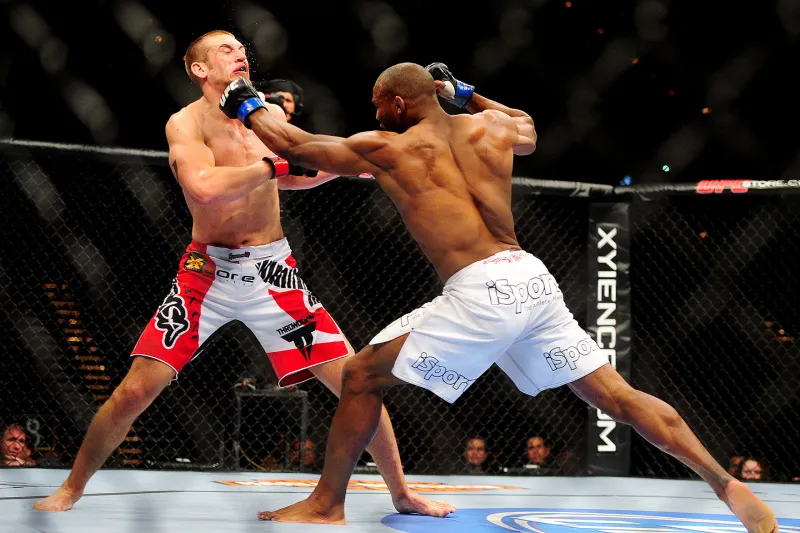
Photo: MMA coach mentoring fighter in gym grappling training, via a1.espncdn.com
There's a version of a fighter's legacy that gets measured in wins, finishes, and title shots. Then there's the version that gets measured in the people a fighter touched — coaches who changed their curriculum, training partners who rethought their approach, young fighters who never saw a single one of his bouts live but somehow carry his fingerprints all over their game.
For Enson Inoue, the second version is the one that actually matters.
When Enson stepped back from active competition, a lot of people in the MMA world assumed that was it. Another warrior riding off into the sunset. But what happened next was something the sport rarely gets to witness — a fighter whose influence didn't shrink after retirement, it expanded. And it did so in the quietest, most unglamorous way possible: through mentorship, through teaching, and through a philosophy about combat that turned out to be far more durable than any single performance inside the cage.
The Gym Doesn't Forget
Here's something worth understanding about how knowledge actually travels through the fight world. It rarely comes from YouTube breakdowns or podcast appearances. It comes from one coach telling another coach something that works. It comes from a training camp where a guy who trained with someone who trained with someone eventually traces the lineage back to a single source.
Enson Inoue became one of those sources.
His approach to grappling — particularly his emphasis on leverage over strength, on positional awareness before submission attempts, and on the psychological dimension of ground fighting — filtered into American gyms in ways that are genuinely hard to trace because nobody was keeping receipts. But the ideas are there. Talk to coaches who came up in the mid-2000s and early 2010s and you'll hear echoes of a philosophy that prioritizes patience on the mat over panic, that treats submission attempts as the result of a process rather than a gamble.
That's Enson's fingerprint, even when his name isn't attached to it.
Mentorship Without a Microphone
One of the things that defined Enson Inoue as a competitor was his complete disinterest in performing for an audience. He wasn't building a brand. He was fighting because that's what he did. That same quality carried over into how he operated after competition.
He wasn't hosting seminars with slick promotional graphics. He wasn't launching a subscription training platform. The mentorship he provided happened in real spaces — gyms, dojos, conversations that didn't get filmed. And because of that, the impact is almost impossible to quantify, which is exactly the kind of legacy that tends to outlast the ones built for the camera.
Fighters who spent time around Enson talk about the way he communicated technical concepts. He wasn't someone who handed you a drill and moved on. He wanted you to understand the why behind every position, every transition, every decision you'd make when someone was trying to take your back at two in the morning during a hard training session. That's not a style you pick up from watching tape. That's a style you absorb from being in the room with someone who genuinely understands what they're teaching.
The Grappling Renaissance He Helped Spark
Let's zoom out for a second and look at where American MMA was heading in the years after Enson's competitive peak. The sport was getting faster, more athletic, more explosive. Knockout artists were dominating the conversation. Submission grappling was starting to look like a secondary skill set rather than a primary one.
And then something shifted.
Not overnight, and not because of any single event, but the sport gradually started to recognize that the ground game hadn't been abandoned — it had just been waiting for coaches and fighters who understood it deeply enough to bring it back to the surface. The rise of Brazilian jiu-jitsu as a mainstream training discipline in American gyms, the renewed emphasis on wrestling that controls rather than just takedowns, the growing respect for fighters who could dictate pace on the mat — all of it has roots that stretch back to the guys who were doing this work in the 1990s and early 2000s.
Enson was one of those guys. And the fact that he kept engaging with the sport after his competitive days meant that his perspective didn't get buried. It stayed in circulation.
What Secondhand Influence Actually Looks Like
Here's the thing about legacies built through mentorship rather than media: they're harder to see but they're also harder to erase. A highlight clip can disappear from a platform. A fight record can get forgotten. But the way a coach structures a drilling session because of something they learned from someone who learned it from Enson Inoue — that persists. It shows up in the way a fighter defends a rear naked choke attempt. It shows up in the patience a competitor displays when they're working from bottom position.
Generations of fighters who couldn't tell you a single detail about Enson's fight record are carrying pieces of his approach inside their game. That's not a small thing. That's actually the definition of a legacy that works.
The Argument for Quiet Greatness
American sports culture has a tendency to measure greatness by visibility. The loudest voices, the biggest platforms, the most replayed moments. Enson Inoue never fit that mold as a competitor, and he certainly didn't chase it afterward.
But there's a real argument to be made that his post-retirement influence shaped the technical direction of American MMA more meaningfully than plenty of fighters who stayed in the spotlight. The coaches he reached, the philosophies he passed along, the emphasis on mat intelligence over raw athleticism — these ideas have legs. They're still running.
Active fighters get credit for what they do in front of cameras. The people who shaped what those fighters learned rarely get mentioned. That's the space Enson has occupied since he walked away from competition, and it's a space that deserves a lot more acknowledgment than it typically gets.
The Real Measure
If you want to understand Enson Inoue's full legacy, you can't stop at the fight record. You have to follow the thread — from his competitive philosophy to the people he mentored, from those people to the fighters they coached, from those fighters to the way American MMA looks and feels right now.
The comeback nobody expected wasn't a return to the cage. It was a quieter, more lasting kind of influence. And honestly? It might be the most impressive thing he ever did.