What If He Came Back? The Retirement Decision That Defined Enson Inoue More Than Any Fight
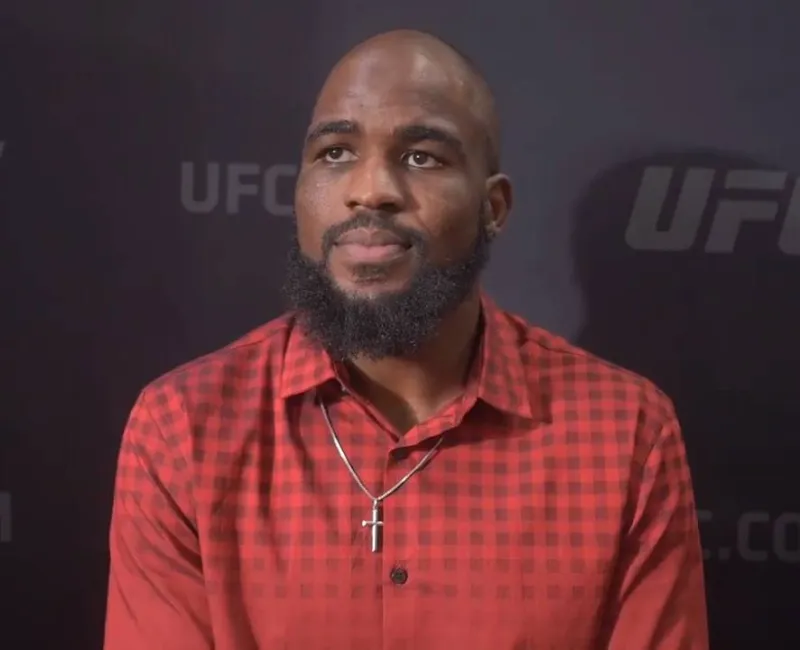
Photo: MMAnytt, CC BY 3.0, via Wikimedia Commons
There's a question that floats around MMA circles whenever old-school fight fans get together and start talking about the sport's forgotten legends. It usually starts with something like, "What if he had stuck around?" Sometimes it's about timing. Sometimes it's about opportunity. But when the conversation turns to Enson Inoue, the question gets a little more complicated — and a lot more interesting.
Because Enson didn't fade out. He didn't get cut. He didn't lose his way through a string of embarrassing defeats that made retirement feel like a mercy call. He walked away on his own terms, with his identity fully intact, at a moment when American MMA was just starting to figure out what it actually wanted to be. And that decision — to stay gone — might be the most underrated move of his entire career.
The Window That Stayed Open
Let's play the alternate timeline game for a second. By the mid-2000s, the MMA landscape in the United States was shifting fast. The UFC was exploding in popularity after The Ultimate Fighter changed everything in 2005. New money was flowing into the sport. Promoters were hunting for names with credibility, fighters who carried real weight with the hardcore fanbase. Enson Inoue was absolutely one of those names.
He had the résumé. He had the reputation. He had the kind of authenticity that couldn't be manufactured by a marketing team. If there was ever a moment for a comeback story to land with maximum impact, that post-TUF era was it. A returning Enson, sharpened by years away from competition and motivated by something deeper than a paycheck, could have walked into that spotlight and genuinely turned heads.
So why didn't it happen? And more importantly — should it have?
The Comeback Trap That Swallowed Other Legends
To understand what Enson avoided, you have to look at what happened to fighters who couldn't say no to that one last run. The examples are everywhere, and they're not pretty.
When fighters return after long layoffs — especially past their physical peak — they're not just fighting an opponent. They're fighting time, ring rust, and the gap between who they were and who they are now. The sport evolves fast. Styles shift. The guys coming up aren't impressed by legacy. They've studied the footage, they've trained against better athletes, and they show up ready to prove a point.
We've watched beloved fighters — guys with hall-of-fame careers and genuine warrior spirits — take one comeback fight too many and end up defined by that exit rather than everything that came before it. It's a brutal dynamic, and it's one that Enson seemed to understand intuitively.
His philosophy was never built around the spotlight. The whole point of his approach to fighting, to training, to life inside and outside the cage, was about something internal. The yamato damashii — the warrior spirit — he talked about wasn't performance. It wasn't for the crowd. A comeback driven by nostalgia or outside pressure would have been a fundamental contradiction of everything he stood for.
What a Late-Career Enson Could Have Looked Like
Still, it's worth sitting with the fantasy for a moment. Imagine Enson returning around 2006 or 2007, with a focused camp behind him and a clearly defined goal. The submission game that made him dangerous in the late '90s and early 2000s was still ahead of mainstream MMA in a lot of ways. The sport was trending toward wrestling-heavy pressure fighters and heavy strikers. A grappler with Enson's depth and mental composure could have caused real problems.
He would have matched up interestingly against a lot of the heavyweights and light heavyweights bubbling through the American scene at that time. Not as a sure-fire contender — that window had probably closed — but as a legitimate threat. The kind of fight that could have reminded a new generation of fans why his name carried so much weight with the old guard.
And if things had gone well? A resurgent Enson with a win or two over recognizable names would have completely reframed his legacy in the mainstream conversation. He might have crossed over from "legend that real fans know" to "name that casual fans recognize." That's not nothing.
Why Staying Retired Was the Harder Choice
Here's the thing about warriors who actually understand what that word means: the hardest battles aren't always the ones fought in a cage or a ring. Sometimes the real test is knowing when the chapter is done.
Enson Inoue built his entire identity around doing things the hard way — not because it was dramatic, but because it was honest. Training in Japan when American gyms were more comfortable. Fighting opponents who didn't come with easy paths to victory. Refusing to compromise his values for career advancement. Every major decision in his life pointed in the same direction: toward integrity, away from convenience.
Choosing not to come back fits that pattern perfectly. It would have been easy — relatively speaking — to say yes to the right offer and ride the nostalgia wave. Promoters would have come calling. Fans would have shown up. The money would have been real. But Enson clearly weighed all of that against something else, something harder to quantify, and landed on a different answer.
That's not stubbornness. That's clarity.
The Legacy That Retirement Actually Built
Here's the irony that's easy to miss: by not coming back, Enson Inoue preserved exactly the thing a comeback would have been chasing. His legacy stayed clean. The story didn't get messy. Nobody had to watch him absorb punches he couldn't have taken in his prime, or tap to a submission game that had passed his by.
Instead, what remains is the full, uncut version of who he was as a fighter. The wins, the losses, the moments of genuine brilliance on the mat, the fights that required more courage than most people will ever understand. All of it sits in the record exactly as it happened, without a late-career footnote muddying the picture.
In a sport that has a complicated relationship with retirement — where fighters almost always come back at least once, and often once too many — Enson's discipline in walking away and staying there is genuinely rare. Maybe even unique at his level.
The Road Not Taken Was Still a Choice
The alternate timeline where Enson Inoue came back and added a late chapter to his career is interesting to think about. It might have gone well. It might have added to the story in meaningful ways. We'll never know.
What we do know is that the road he actually took — the one where he stayed retired, stayed true to his values, and let his legacy speak for itself — was a choice. A deliberate, conscious, fully Enson choice. And in a sport full of fighters who couldn't resist the pull of one more payday or one more moment in the lights, that choice stands out.
Some warriors prove themselves by fighting. Enson Inoue proved himself by knowing when to stop — and having the strength to mean it.