The Lost Art: How Enson Inoue's Submission Mastery Slipped Through the Cracks of MMA History
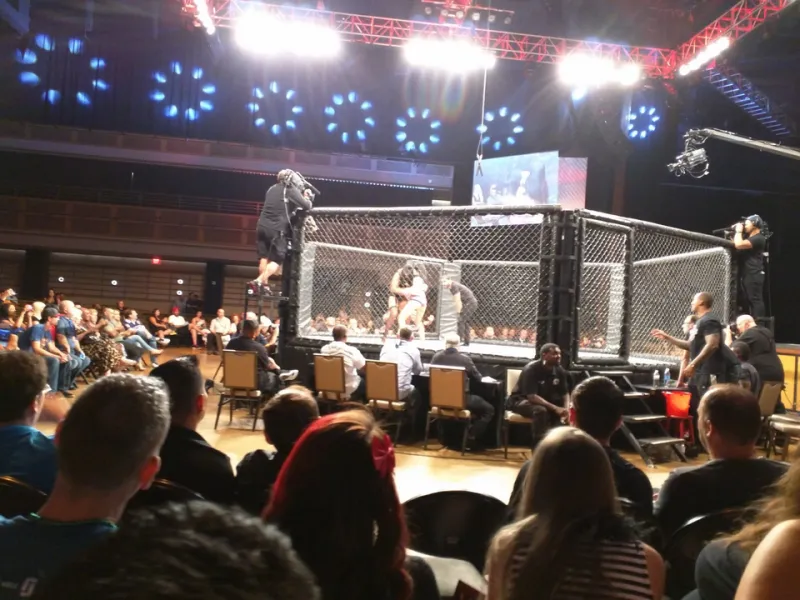
Photo: Lingerie Fighting Championships, CC BY-SA 4.0, via Wikimedia Commons
There's a strange thing that happens in combat sports. Sometimes the most technically gifted fighters — the ones whose game was so far ahead of the curve that coaches are still catching up — are the least documented. Enson Inoue is one of those guys. He was finishing elite-level opponents with submissions at a time when half the MMA world was still figuring out how to fall properly, and yet if you go looking for a detailed breakdown of how he did it, you're going to come up mostly empty.
That's not just a gap in the archive. That's a loss for the entire sport.
What He Was Actually Doing Out There
Let's set the scene. The late '90s and early 2000s. MMA in the US was still largely a brawler's game — guys with wrestling backgrounds trying to smash people on the ground, strikers hoping their hands could carry them past anyone who wanted to take it to the mat. Meanwhile, Enson was operating in Japan's Shooto and Pride circuits with a grappling vocabulary that looked nothing like what American fans were used to seeing.
His submission work wasn't just about knowing the moves. It was about the sequencing — the way he'd set traps three or four steps before the finish, using positional pressure to manufacture openings that his opponents never saw coming. He had a feel for the mat that most fighters spend their entire careers chasing without ever finding. And he was doing it against real competition, not just showcasing it in controlled sparring environments.
The triangle choke he's most associated with wasn't a lucky catch. It was the product of a system — a specific way of controlling the clinch, managing distance, and reading an opponent's reaction patterns that created the geometry for the finish. But unless you were in the cage with him or training alongside him, you weren't getting that education.
The Documentation Problem
Here's where it gets frustrating. Compare Enson's legacy to some of his contemporaries. Guys who were arguably less technically sophisticated ended up with full instructional series, coaching platforms, and seminar circuits that kept their methodologies alive and accessible. Royce Gracie built an entire industry around teaching. Frank Shamrock had coaching content. Even fighters with shorter careers found ways to package their knowledge and put it out into the world.
Enson? Not so much. There's no comprehensive instructional series. The seminar appearances were sparse compared to what you'd expect from someone of his caliber. And the detailed technical breakdowns that coaches and analysts now use to study and teach submission grappling? They largely don't exist for his game.
Part of that is personality. Enson was never the self-promotional type. He wasn't out here chasing brand deals or trying to build a coaching empire. The guy fought because he loved to fight — because it meant something to him on a level that went beyond commercial opportunity. That authenticity is part of what made him legendary. But it also meant he never sat down and said, "Okay, let me turn this into content."
Part of it is also geography and timing. A lot of his most formative work happened in Japan, in a combat sports culture that didn't have the same instructional media infrastructure that American MMA eventually developed. Pride wasn't exactly producing coaching DVDs. Shooto wasn't running YouTube breakdowns. The knowledge stayed in the room.
What Modern Grapplers Are Actually Missing
This isn't just nostalgia talking. There are real, practical gaps in modern grappling education that trace back to this kind of underdocumented era.
Enson's approach to submission hunting from disadvantaged positions — specifically the way he could work toward finishes even when he wasn't in dominant control — is something that modern coaches still struggle to teach effectively. A lot of submission grappling instruction today is built around establishing position first, then hunting the finish. Clean hierarchy, clean execution. Enson was doing something messier and more instinctive: creating submissions out of scrambles, out of transitions, out of moments that looked like chaos but were actually calculated.
That's a skill set that's incredibly valuable in modern MMA, where the pace is faster, the scrambles are more athletic, and clean positional grappling is harder to establish against elite-level wrestlers. But without access to how Enson was constructing those moments, coaches are essentially trying to reverse-engineer a system from incomplete footage.
The handful of clips that exist online give you the outcomes — the tap, the finish, the moment of victory. They don't give you the setup, the read, the adjustment that happened two exchanges earlier that made the whole thing possible. That's the part that actually teaches you something. And that's the part that's largely gone.
The Quiet Coach Who Never Quite Showed Up
What makes this even more interesting is that by all accounts, Enson had the kind of coaching instincts that could have made him genuinely elite in that role. Fighters who trained with him talk about his ability to communicate technical concepts in plain language — no jargon, no ego, just direct and useful feedback. He had the rare combination of high-level personal experience and the ability to translate that experience into something another person could actually use.
The coaching career that could have been would have been something. A guy with his grappling IQ, his composure under pressure, and his ability to read opponents — that's the kind of coach who changes programs. But for whatever combination of reasons, it never fully materialized into the kind of sustained coaching presence that preserves a technical legacy.
Why This Still Matters
MMA in 2025 is more sophisticated than it's ever been. The athletes are bigger, faster, and better trained across the board. But there are still holes in the collective grappling knowledge base — places where the sport is reinventing wheels that guys like Enson had already built and were already riding twenty years ago.
The submission game Enson brought to the cage wasn't just effective for its era. It was structurally sound in ways that hold up against modern defenses. The problem is that without detailed documentation, the next generation of grapplers has to discover those principles through their own trial and error instead of learning from someone who already figured it out.
That's the real cost of the documentation gap. Not just that we don't have a record of what Enson Inoue did — it's that we don't have access to why he did it, and how, and what he was seeing in the moments that made those finishes possible.
Some knowledge just lives in the body of the fighter who built it. And when that fighter never fully commits to passing it on, the sport is a little poorer for it — even if most people don't know exactly what they're missing.