Still Relevant, Still Right: Why Today's MMA Scene Needs to Study Enson Inoue's Playbook
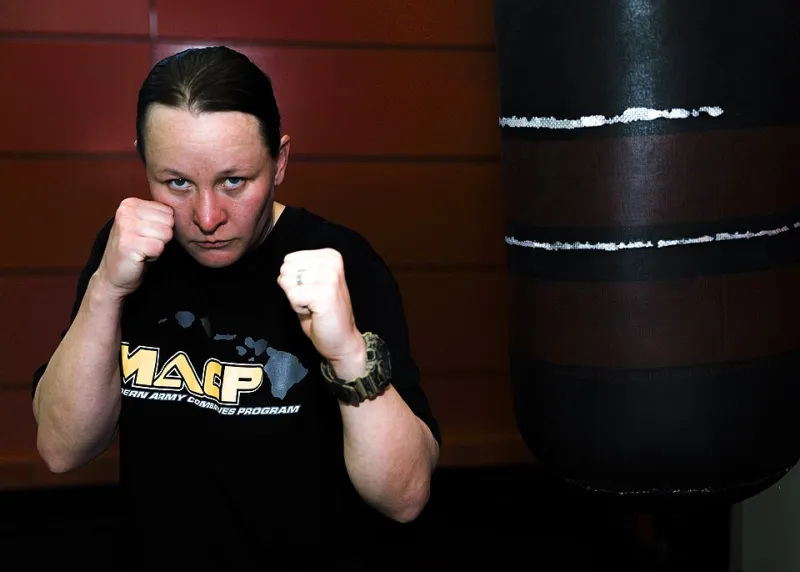
Photo: Marcy Sanchez, Public domain, via Wikimedia Commons
MMA has a short memory. That's not a criticism — it's just the nature of a sport that moves at the speed of the next card, the next signing, the next viral knockout. But every now and then, it's worth slowing down and asking: who figured things out early, and what did they know that we're still learning?
Enson Inoue is that guy. And honestly? His relevance has only grown.
The Shooto Years: Learning Before the Hype Arrived
Before the UFC was a household name, before Conor McGregor sold out arenas, and before every college wrestler with a good chin was getting scouted, Enson Inoue was grinding through Japan's Shooto circuit. For those unfamiliar, Shooto wasn't just a promotion — it was a philosophy. It emphasized technique, adaptability, and a kind of martial discipline that American combat sports culture was only beginning to explore.
Enson didn't just pass through that world. He planted roots in it. He trained with Japanese fighters, absorbed the culture, and built a competitive identity that was genuinely hybrid — not in the watered-down, marketing-speak sense, but in the real sense of someone who had internalized multiple fighting traditions and made them work together.
For American fighters today who are looking to expand their game internationally, that early chapter of his career is practically a case study. The lesson? Go where the knowledge is, even if it's uncomfortable, even if it means being the outsider in the room.
Cross-Cultural Fighting Intelligence: A Skill Most Fighters Skip
Here's something the modern MMA world talks about a lot in theory but practices inconsistently: genuine cross-cultural fighting intelligence. It sounds abstract, but it's actually pretty concrete. It means understanding that different fighting traditions produce different athletes with different tendencies, and that you can't prepare for a Russian sambo specialist the same way you prepare for a Brazilian jiu-jitsu black belt or a Muay Thai striker out of Thailand.
Enson Inoue lived this. Not as a concept, but as daily reality. Competing in Japan meant facing opponents whose backgrounds, training environments, and mental frameworks were shaped by entirely different systems. He had to develop the kind of adaptability that doesn't come from a training camp — it comes from years of immersion.
Fast forward to 2024, and American fighters are finally catching up to what Enson was doing in the late '90s and early 2000s. Top-tier American prospects now regularly train overseas. Coaches pull footage from ONE Championship, Rizin, and KSW alongside UFC tape. Promoters are signing international fighters at a rate that would've seemed ambitious a decade ago.
All of that is movement in the direction Enson was already pointing.
The Mindset Piece: Why His Mental Approach Still Hits Differently
You can't talk about Enson Inoue without talking about mindset — not because it's a buzzword, but because his approach to competition was genuinely unusual in ways that hold up under scrutiny.
He competed with what can only be described as a kind of fearless acceptance. Not recklessness — there's a difference. He prepared hard, he showed up ready, and then he let the fight be what it was. When things went badly, he didn't collapse into excuse-making. When things went well, he didn't perform for the cameras. He just fought.
In today's MMA landscape, where social media creates enormous pressure to manage perception at every turn, that approach is almost countercultural. Fighters are expected to be brands. They're expected to have takes, to build audiences, to curate narratives around their careers. Some of them are genuinely good at it, and there's nothing wrong with that.
But there's also something to be said for the fighter who just competes — who lets the work speak without amplification. Enson modeled that, and it's a model worth considering, especially for younger fighters who are still figuring out who they are in the sport.
What Promoters and Coaches Should Take From His Career
It's not just fighters who have something to learn here. If you're building a gym, developing talent, or running a promotion, Enson Inoue's career trajectory offers some genuinely useful signals.
For coaches: the value of exposing your fighters to international competition early is enormous. Enson's development was shaped by environments that challenged him in ways a purely domestic training circuit couldn't have. Building those international connections — training camps abroad, relationships with gyms in Brazil, Japan, or Eastern Europe — isn't a luxury for elite fighters anymore. It's table stakes.
For promoters: the American market has an appetite for authentic international matchups that goes beyond novelty. Fans have gotten smarter. They recognize when a fight has real stakes versus when it's a showcase. Enson's career was built on real stakes, and that authenticity is part of what made it resonate. Booking fights that matter — not just fights that look good on a poster — is something the sport's best promoters have always understood, and it's something Enson's career exemplifies.
The Bigger Picture: A Legacy Built on Substance
Enson Inoue never had the biggest platform. He wasn't the loudest voice in the room. He didn't have a marketing machine behind him during his peak years. What he had was a career built on substance — on genuine competition at the highest levels, on a willingness to go anywhere and fight anyone, and on a personal code that stayed consistent whether he was winning or losing.
In a sport that sometimes confuses visibility with significance, that's worth something.
The global MMA landscape is more interconnected than ever, and the fighters who are thriving in it are the ones who have learned to move fluidly across cultures, styles, and competitive environments. That's the playbook Enson Inoue was running before most people knew a playbook existed.
Studying his career isn't nostalgia. It's preparation.